Joining a membership is often one small task in a busy week. Someone might download the activity they came for or watch one video, then put off exploring the rest. A few helpful emails can make it easier to come back and enjoy more of what you offer.
These five ideas give you a starting point. Adjust the timing to suit your members, and keep each email focused on something useful rather than sending more for the sake of it.
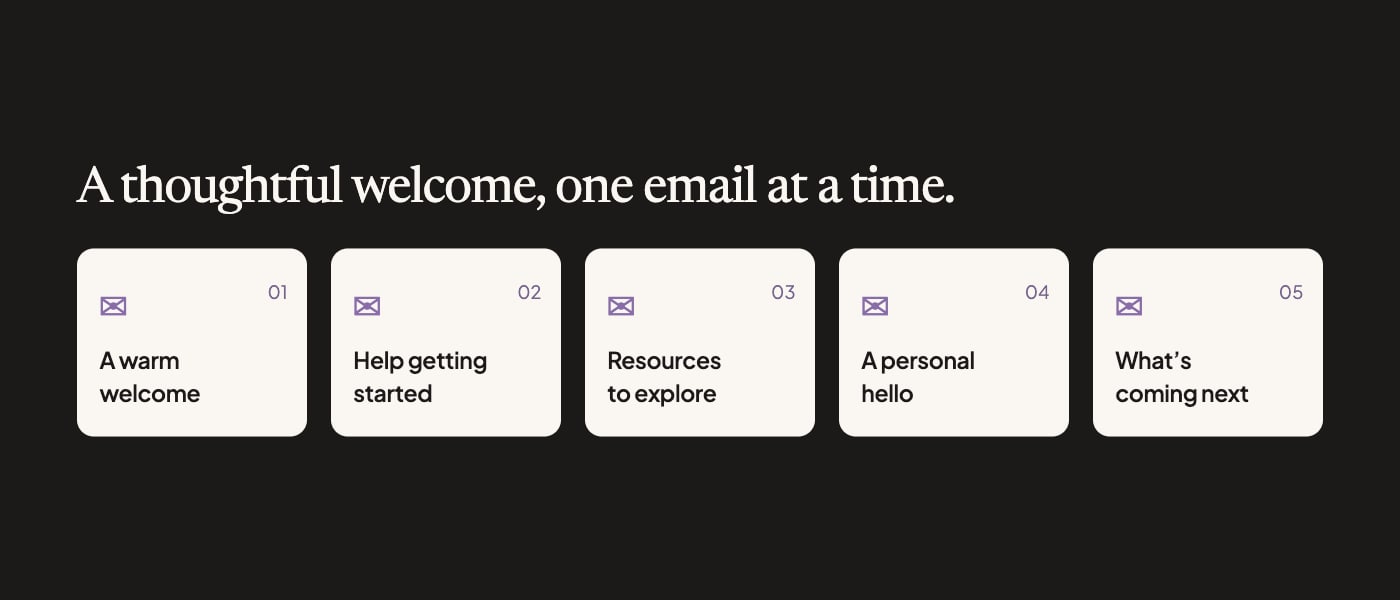
1. A warm welcome and a clear way in
When: as soon as someone joins.
Thank them for becoming a member, link clearly to their account and explain where their resources are waiting. Include a simple way to get help if logging in does not go smoothly. A subject such as “Welcome to the library — your login details” is easy to find again later.
2. A little help getting started
When: a day or two later.
Show members where to begin. You might introduce age-group filters in a teaching library, point to a beginner’s drawing guide or explain how to save favourites. Keep the choices manageable: a short tour should help someone find a resource, rather than introduce every feature at once.
3. A few resources worth exploring
When: towards the end of the first week.
Choose a small selection that feels useful to someone starting out, and explain what they can do with it. A photography club could share three beginner exercises, with a note about the equipment needed. Only describe something as a member favourite when your own feedback supports it.
4. A personal hello from you
When: during the second week.
Tell members a little about the person behind the club or library, and invite a reply. Ask what they would like to learn, what they enjoy making or what would help them get started. Those conversations can help you understand your audience and decide what to create next.
5. Something to look forward to
When: later in the first month.
Share what you have added recently and what you are working on next. Explain what members will be able to try or learn, and only promise dates you can manage. If you mention an annual plan, show its full price and explain the commitment clearly.
Putting your welcome emails together
- Write in your own voice. Your members came for your work; the emails should sound like the person who made it.
- Keep the links useful. Check they still point to the right resources as your library changes.
- Respect email preferences. Keep essential account messages distinct from newsletters and promotions, and give people control over optional emails.
- Listen to replies. If several members ask the same question, improve the explanation on the site as well as in the email.
A warm welcome does not need to be elaborate. It needs to help members feel confident using the library and comfortable asking for help.